
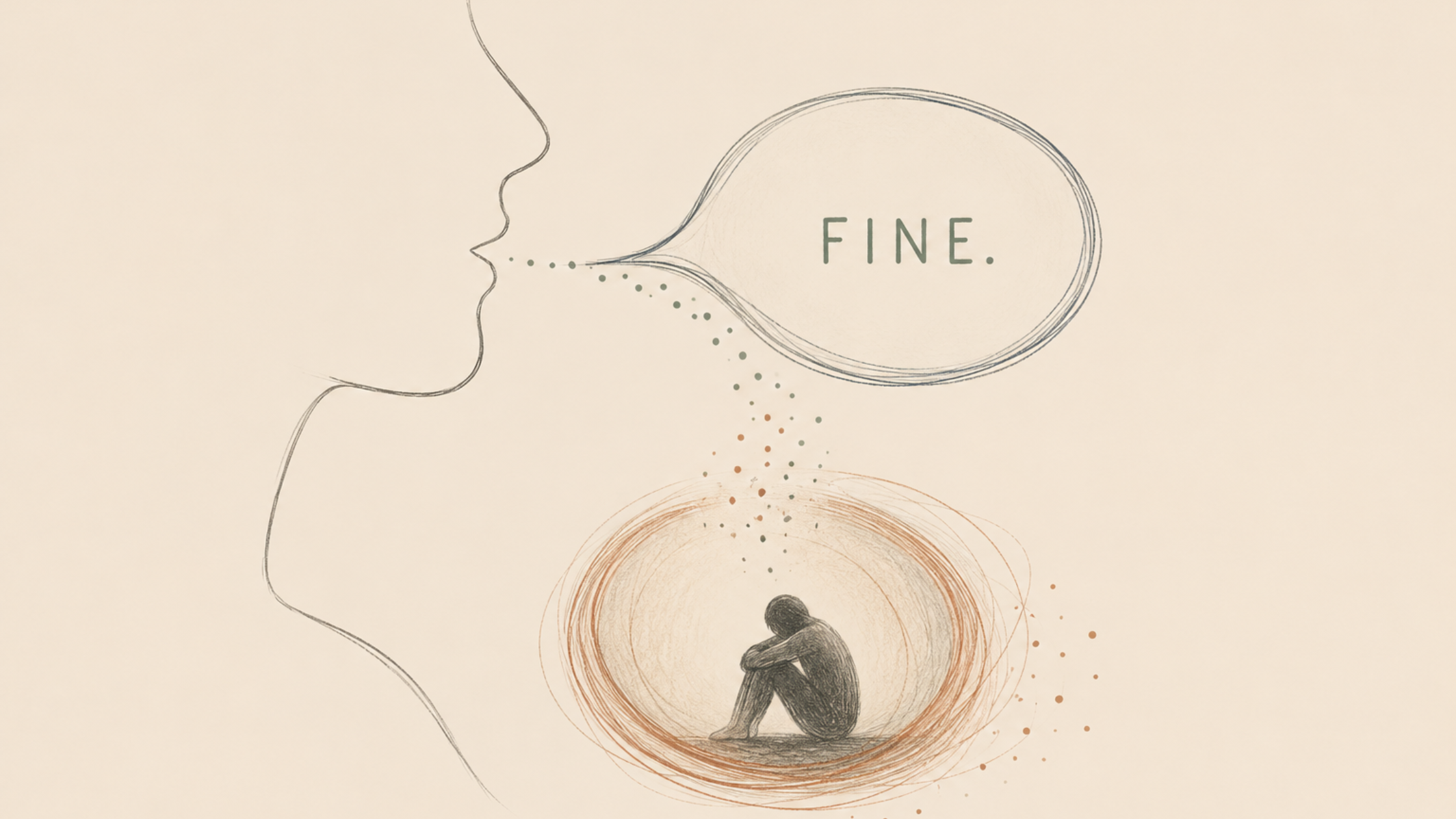
There’s an exchange that happens to most of us dozens of times a day, so quickly that neither person really notices it happening. Someone asks, “How are you?” You say, “Fine.” It isn’t quite true and it isn’t quite false. It’s just the right-sized answer for the space you’re standing in: a hallway, an elevator, the three seconds before a meeting starts. “Fine” isn’t a report on your inner state. It’s a piece of social machinery. Its job is to close the conversation cleanly, without incident, so both of you can keep moving.
What’s interesting is how fast it arrives. Someone asks, and before you’ve located what you actually feel, “fine” is already out of your mouth, doing its work. It doesn’t wait for an answer to form. It substitutes for one.
What the word is actually doing
Think about what “fine” spares you both. The messier, truer answer would hand the other person something to hold, and in a hallway or a bus stop or the gap before a meeting starts, there’s rarely time to receive it well. It spares you too: the risk of being misunderstood, the work of explaining something you haven’t fully worked out yet. And it keeps the exchange moving at whatever pace you’ve both silently agreed on.
None of that makes the word dishonest. Most of the time it’s closer to considerate than false. The trouble starts when it stops being the answer you give the cashier and quietly becomes the answer for everyone, including the person across the table who actually has time, who actually wants to know.
When the shortcut becomes the whole route
That’s the part worth noticing. Not any single “fine,” which is almost always harmless, but the pattern of them.
A word that’s efficient in a hallway isn’t the one you want showing up automatically at the dinner table, or in the quiet car ride home, or in the pause after someone who loves you asks a second time because they could tell the first answer wasn’t quite true. In those rooms the word is still doing its old job, closing the conversation gently, except nobody needed it closed this time. Somebody needed it opened.
This usually isn’t a decision. Nobody sits down and chooses to become unreachable. It happens the way most real distance happens, gradually, through a thousand small, reasonable-looking choices to keep things brief. Each “fine” is a door, shut politely. One door closing barely registers. A few thousand of them, over years, and you’ve built a house you can be seen walking around in without anyone actually being let inside.
A small practice, not a big confession
That doesn’t mean you owe everyone the unfiltered truth. Saving your real answer for the people who’ve earned it is discernment, not avoidance. The cashier doesn’t need your week.
What might help is smaller: the next time “fine” comes out on reflex, take half a second before it lands. Not to change your answer necessarily, just to check if it’s true. Often it will be.
But every so often you’ll catch it mid-flight. You’ll notice you reached for “fine” the way you reach for your car keys, without thinking, in front of exactly the person who would have stayed to hear the real answer. That’s worth pausing in. Not because you owe more. Just because you now know something you didn’t a second ago, that a truer answer was available, and you picked the door instead.
That noticing, repeated enough times, is where honesty with the people who matter actually starts. Not in one big conversation. In the ordinary moments where you could have said “fine,” and told someone the smaller, truer thing instead.
Leave a Reply